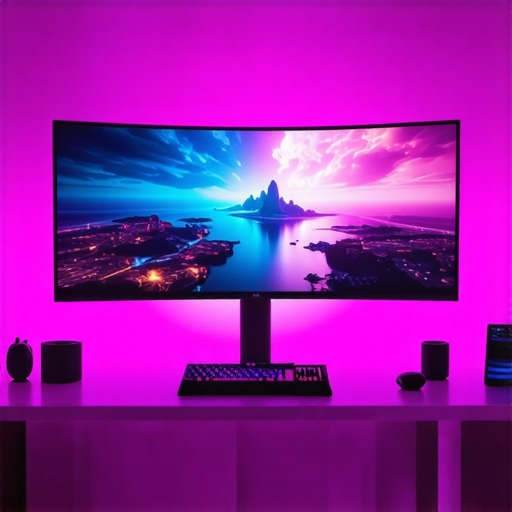
I remember the exact moment I realized I was wasting my money on a flat, standard monitor. It was during a late-night gaming session, frustration rising as I struggled to get lost in the game world. My eyes kept darting around the screen, and I felt detached from the immersive experience I craved. That’s when I finally understood what I was missing — a monitor that wraps around my view, pulling me right into the action.
Why I Switched to Curved and Ultrawide Displays
Since making the switch, my entire digital experience has transformed. Whether I’m gaming, working, or binge-watching, these screens make me feel like I’m right there, in the scene. The secret? Curved and ultrawide monitors create a more natural, panoramic view that reduces eye strain and enhances immersion. But I get it — investing in a new display can feel overwhelming. There are so many options, and it’s easy to wonder if all the hype is justified.
Well, I’m here to tell you that, yes, these displays are worth it — if you pick the right ones. Today, I’ll guide you through how to choose the best curved and ultrawide monitors for your needs, based on my personal experience and research. If you’ve ever felt frustrated staring at a flat screen that never quite feels right, this post might be the game-changer you need.
Is the Hype About Curved & Ultrawide Monitors Justified?
Early in my journey, I made the mistake of buying a cheap, generic ultrawide that didn’t deliver on its promise of immersion. The curve was minimal, and the image quality was lackluster. It left me disappointed and questioning whether these screens were just a gimmick. But I learned that not all displays are created equal. The key is to look for high-quality panels, appropriate curvature, and size that matches your space and usage. If you’re curious about the real benefits and whether this tech is worth your investment, I recommend checking out why a curved monitor is the future of home entertainment.
So, have you faced the same dilemma? Are you tired of feeling like your screen is just a flat window rather than an immersive portal? If so, keep reading — I’ll help you find the best options that truly enhance your viewing experience and make every pixel count.
Set Your Budget and Priorities
Before diving into the technical details, define what matters most for your use case—gaming, professional work, or entertainment. I once bought a high-end ultrawide without considering my desk space, which led to constant adjustments. I recommend starting with a clear budget and listing must-have features like resolution, curvature, and size to avoid impulsive purchases.
Identify the Perfect Size and Curve Radius
Size is crucial. Think of it like choosing a window: too small, and you miss the panoramic effect; too large, and it becomes overwhelming. For most desks, a 34-inch ultrawide or a 32-inch curved monitor strikes a good balance. As for curvature, a radius of 1800R or 1500R offers a natural field of view, mimicking how our eyes perceive the world. I initially purchased a 1500R curved monitor, and the immersive effect was dramatic, especially during gaming sessions.
Measure Your Workspace
Use a tape measure to ensure the monitor fits comfortably on your desk with room for accessories. I once ordered a 49-inch ultrawide, only to realize it was too bulky for my setup, leading to a frustrating rearrangement. Check the monitor’s dimensions and compare them with your available space.
Choose the Right Panel Technology
Panel technology affects color accuracy, response time, and viewing angles. IPS panels deliver vibrant colors and wide angles, perfect for creative work. VA panels offer higher contrast, ideal for movies and gaming. TN panels are faster but less color-accurate, suitable for fast-paced gaming. When I tested an IPS ultrawide, I noticed richer colors, making my editing work more precise. For total immersion, prioritize IPS or VA panels.
Compare Refresh Rate and Response Time
High refresh rates (120Hz or higher) make motion smoother, essential for gaming. Response time impacts ghosting; lower is better. I upgraded from a 60Hz to a 144Hz ultrawide, and the difference in fluidity was noticeable, especially during fast action scenes. For casual use, 75Hz suffices, but for gaming, aim for 120Hz or more.
Evaluate Connectivity and Ergonomics
Ensure the monitor has adequate ports—HDMI, DisplayPort, USB-C—and adjustable stands for height, tilt, and rotation. I once bought a monitor with excellent picture quality but no height adjustment, causing discomfort during long sessions. Ergonomic features help maintain comfort and prevent strain during extended use.
Read Reviews and Test Before Buying
Whenever possible, test the monitor in-store or read detailed reviews. I remember ordering a highly-rated ultrawide online, only to find the color calibration off. Buying from reputable brands and checking return policies (like privacy policy) ensures you can make adjustments if needed.
Utilize Expert Resources and Guides
Leverage dedicated resources such as ultimate guides and comparison tools to refine your choices. These insights helped me identify the best models for my budget, vastly improving my setup.
< >
>
Many enthusiasts assume that simply choosing a curved or ultrawide monitor guarantees an immersive experience, but that’s a misconception. The real challenge lies in understanding the nuances and avoiding common pitfalls that can diminish the benefits of this technology. In my experience, one of the most overlooked issues is the tendency to focus solely on specifications like curvature radius and size without considering how these elements interact with your workspace and viewing habits.
Contrary to popular belief, higher curvature radii don’t automatically mean better immersion. A 1500R curve might feel more natural for some, but for larger screens, a 1800R or even 2000R might be more comfortable, especially if you sit farther away. The key is personal calibration — what works for one setup may not work for another. This is why I always recommend testing different models in-store or reading detailed reviews that include ergonomic feedback.
Another common myth is that ultrawide screens are only for gaming or entertainment. In fact, many professionals overlook their potential to enhance productivity. An ultrawide monitor can replace multiple displays, streamlining workflows and reducing the clutter of switching between windows. I’ve personally experienced how a well-chosen ultrawide can improve multitasking, especially when combined with features like picture-in-picture modes or split-screen functionalities. For an in-depth look, check out this guide on ultrawide displays and productivity.
However, beware of the trap of chasing the latest tech without considering your actual space. Oversized monitors may seem appealing online, but if your desk can’t support them comfortably, you’ll end up sacrificing ergonomics and potentially causing strain. Measure your workspace carefully before making a purchase. Remember, a good monitor should complement your environment, not dominate it.
What Advanced Users Should Watch Out For
Advanced users often focus heavily on specs like response times and refresh rates, but these are only part of the story. Color accuracy and consistency across the screen are equally crucial, especially for creative professionals. Look for models with good factory calibration or the possibility to calibrate yourself using hardware tools. Additionally, pay attention to uniformity issues — uneven brightness or color across the display can be distracting and reduce immersion.
Finally, don’t fall into the trap of assuming all curved or ultrawide monitors are created equal. The quality of panel technology and build significantly impact the longevity and visual performance. As I learned from expert reviews, investing in reputable brands with proven track records can save you money and disappointment in the long run.
Have you ever fallen into this trap? Let me know in the comments. Remember, knowing these nuances will help you make smarter decisions and truly elevate your viewing experience.
Once you’ve invested in a high-quality curved ultrawide monitor, the next step is ensuring it stays in top shape for years to come. Proper maintenance and the right tools can significantly extend your display’s lifespan and keep your viewing experience seamless. I personally rely on a combination of hardware care routines and software solutions to maintain peak performance.
How do I keep my monitor performing over time?
First, regular cleaning is essential. I use a microfiber cloth to gently wipe the screen, avoiding harsh chemicals that could damage the panel. For stubborn smudges, a mixture of distilled water and a small amount of isopropyl alcohol works wonders. Avoid applying liquids directly to the screen; instead, spray them onto the cloth. This simple routine prevents dust buildup and keeps the display clear, enhancing clarity and color accuracy.
Second, monitor calibration tools are invaluable. I recommend investing in a hardware calibrator like the Datacolor SpyderX or X-Rite i1Display Pro. These devices allow you to fine-tune color accuracy, ensuring your ultrawide monitor delivers consistent visuals, especially if you’re into creative work or gaming where color precision matters. Regular calibration—every few months—helps adapt to any changes in display characteristics over time.
Third, software management tools can optimize your experience. I use DisplayHDR settings and color management software to adjust gamma and brightness levels, preventing eye strain during long sessions. Additionally, enabling blue light filters and flicker-free technology reduces fatigue, especially during extended use.
For ongoing performance, keeping your graphics drivers and monitor firmware updated is crucial. Manufacturers often release updates that fix bugs, improve compatibility, or enhance features. I regularly check the manufacturer’s website or use dedicated software tools to ensure my system is up-to-date, which helps maintain image quality and responsiveness.
Looking ahead, I believe the trend is moving toward smarter, self-calibrating screens that adapt automatically to ambient lighting and usage patterns. As technology advances, your monitor will become more autonomous in maintaining optimal performance, reducing manual upkeep.
Try This Tip for Long-Term Clarity
One advanced tip I highly recommend is setting up a periodic calibration schedule using hardware tools. This practice ensures your colors stay true and brightness remains consistent. If you haven’t already, consider investing in a calibration device; it’s a game-changer for professional and immersive viewing experiences. Want to dive deeper? Check out this comprehensive guide for more tips on maintaining your ultrawide display’s performance. Regular maintenance not only prolongs the life of your monitor but also preserves the immersive quality that makes curved ultrawide screens so compelling. Start today, and enjoy flawless visuals for years to come!
The Hardest Lesson I Learned About Ultrawide Displays
One of my biggest surprises was realizing that not all ultrawide monitors offer the same immersive experience. I initially thought bigger meant better, but I overlooked details like panel quality and ergonomics. It taught me that understanding personal space and how your eyes perceive curvature makes all the difference.
3 Myths About Curved Monitors That Held Me Back
Believing that higher curvature always equals better immersion was a mistake. I learned that the ideal curvature depends on your seating distance and monitor size. Similarly, I used to think ultrawides are only for gaming, but they can dramatically enhance multitasking and productivity when chosen wisely.
What Experts Won’t Tell You About Your Screen Setup
Many overlook the importance of calibration and workspace ergonomics. I discovered that investing in calibration tools and measuring your desk space beforehand can save you from disappointment and strain. These insights helped me transform my setup into an immersive, comfortable environment.
My Essential Toolkit for Optimizing Ultrawide Experiences
Tools like the Datacolor SpyderX calibration device and software such as DisplayHDR are my go-to for maintaining color accuracy and visual quality. Trustworthy brands with proven track records, like LG and Dell, also ensure longevity and performance. For detailed reviews, I rely on expert guides that compare panel technologies and ergonomic features, helping me make informed choices.
Seize Your Screen’s Potential Today
Now that you know the secrets behind selecting and maintaining a high-quality curved ultrawide monitor, it’s time to upgrade your visual journey. Don’t settle for less—immersive screens can truly elevate your gaming, work, or entertainment experience. Ready to transform your setup? Share your biggest challenge or question below, and let’s explore the perfect monitor for you together.
Your detailed insights on choosing the right curved ultrawide monitor really resonate with my own experience. I initially bought a 49-inch ultrawide for multitasking and gaming, but I quickly realized that size isn’t everything—especially if the monitor’s curvature doesn’t align well with my viewing distance. Like you mentioned, calibration and ergonomic considerations are often overlooked but play a crucial role in truly immersing yourself in the display. I’ve found that investing in a quality calibration tool, such as the X-Rite i1Display Pro, significantly improved my color accuracy and reduced eye strain during long work sessions. Have you noticed any particular brands or models that excel in maintaining consistent calibration over time? I’d love to learn more about the longevity of different panels, especially in professional settings where color accuracy is critical.
Reading your experience really highlights how crucial proper calibration and ergonomic setup are when it comes to ultrawide and curved monitors. I totally agree that not all panels maintain color accuracy over time, especially with intensive use. That’s why I’ve been leaning towards models that come factory-calibrated with good build quality, like some from LG or Dell. I also make a point to do calibration sessions every few months with a hardware tool like the SpyderX to keep things consistent. Have you tested any specific brands that excel in long-term calibration stability? Personally, I’ve noticed that cheaper panels tend to drift more quickly, which can be frustrating in professional work. Also, for immersion, I’ve found that a slight adjustment to the monitor’s position and angle makes a surprising difference in the overall experience, especially considering various seating arrangements. How do you handle ergonomic adjustments to maximize immersion without sacrificing comfort? Would love to hear your thoughts or tips based on your setup.
Your insights on the importance of panel technology and calibration really hit home. I’ve experimented with several monitors and found that even within reputable brands, calibration can drift over time, especially with continuous use. I personally prefer IPS panels for their color accuracy, particularly for creative work and immersive gaming sessions, but maintaining that vibrant display requires regular calibration, which I do every few months with tools like the SpyderX. I’m curious—have you noticed any specific models or brands that are particularly good at holding calibration over long periods? Also, regarding ergonomics, I’ve found that adjusting the monitor’s height and tilt significantly enhances the experience, preventing fatigue during long sessions. Do you have any tips on optimizing workspace setup to improve immersion without sacrificing comfort? I’d love to hear your thoughts or any additional tools you’ve found helpful for maintaining top display performance.