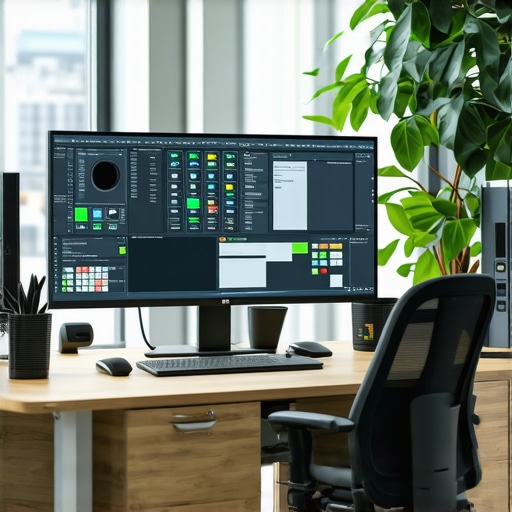
It started with a late-night email scroll, and suddenly I found myself squinting at a tiny window on my aging monitor. Frustration bubbled up—my neck was sore, my eyes strained, and productivity? Nil. That’s when I had my lightbulb moment: maybe it’s time for a serious upgrade. If you’ve ever felt overwhelmed by cluttered screens or hampered by a rigid workspace, you’re not alone. In fact, many professionals are discovering that traditional monitors just don’t cut it anymore, especially when multitasking or working on complex projects. Today, I’ll share how **the shift to 5K ultrawide displays** can free you from those frustrations and supercharge your efficiency.
Why settling for less isn’t an option anymore
Modern work environments demand more than static screens and flickering pixels. Our brains are wired for immersion, and settling for outdated displays can leave you feeling detached or inefficient. I used to dismiss ultrawide monitors as mere gimmicks until I tried one myself. The transformation was immediate—what once felt like a cluttered desk suddenly became a seamless workspace. According to recent tech analyses, ultrawide screens improve productivity by reducing the need to switch between apps, saving hours weekly. Curious if your current setup is holding you back? It’s a question worth exploring.
Is the hype around 5K ultrawide displays actually justified?
Like many, I initially thought the investment was excessive. I made the mistake early on of believing that a high-resolution screen wouldn’t make a tangible difference. But after experiencing the vivid clarity of a 5K ultrawide, I saw my workflow improve dramatically. It’s essential to recognize that not all screens are created equal—cheaper alternatives might seem tempting but often fall short on clarity and immersion. Before you decide, consider how a well-chosen ultrawide display can fundamentally change your work and gaming experiences. For more insights, check out our comprehensive guide on [ultrawide displays and their impact on productivity and gaming](https://curvedtvs.ultimatehomedisplays.com/ultrawide-displays-and-their-impact-on-productivity-and-gaming). Ready to explore how you can upgrade your workspace? Let’s get into the practical steps next.
Select the Right Display Size and Curvature
Start by assessing your workspace and your needs—are you looking for gaming, professional multitasking, or immersive entertainment? For a seamless experience, opt for a 34-inch or larger ultrawide monitor with a gentle curve (around 1800R to 2300R). I once tried stacking two smaller screens side-by-side, which caused neck strain and inconsistent color profiles. Transitioning to a single curved ultrawide eliminated these issues and provided a panoramic view that felt natural. Think of a curved monitor as wrapping a movie around your field of vision—this minimizes distortions at the edges and creates a sense of immersion.
Position Your Monitor for Maximum Comfort
Place your monitor so that the top edge is at or just below eye level. Keep the screen about an arm’s length away, and ensure the curvature aligns with your viewing angle to prevent distortion—think of it as hugging the screen with your peripherals. I experimented by adjusting the tilt and height multiple times until I found a position that didn’t cause neck fatigue after hours. Use adjustable monitor arms to fine-tune your setup, enabling smooth adjustments for height, tilt, and swivel. Proper positioning ensures your eyes remain centered and your neck stays relaxed, which is critical for long-term comfort.
Configure Software and Visual Settings
Once physically set up, calibrate your display’s resolution and refresh rate—preferably 5K or higher for ultrawide screens, with a refresh rate of at least 75Hz for smooth movement. Color calibration is vital; use software tools to match your monitor’s output to standard color profiles, especially if you do color-sensitive work. I once overlooked this and noticed duller images, which hampered my editing precision. Enable features like anti-glare and adjust brightness and contrast to suit your environment, reducing eye strain. Many curved monitors support Picture-by-Picture (PBP) mode, allowing you to work across multiple inputs—perfect if you multitask or need to compare content side by side.
Leverage Immersive Technologies for Better Depth
To heighten the sense of depth, utilize software that utilizes your monitor’s curvature—gaming engines and productivity tools now offer settings optimized for curved displays. If you’re setting up a dedicated entertainment zone, consider pairing your ultrawide with a compatible curved TV for an uninterrupted cinematic feel. Think of the entire experience as transforming from viewing on a flat poster to looking through a window that pulls you into the scene. Incorporate ambient bias lighting behind the monitor to reduce contrast between the screen and room, enhancing perception of depth and reducing eye fatigue. I added bias lighting one evening and found my viewing comfort improved dramatically, making long sessions more enjoyable.
Test and Tweak Regularly
Your setup isn’t complete after the initial arrangement. Regularly test your display with calibration tools and adjust settings based on your evolving needs. Use online test images and tools—like contrast test patterns or color accuracy charts—to fine-tune your display. Don’t be afraid to experiment with different configurations; small adjustments can significantly impact immersion and comfort. For example, I once increased the monitor’s tilt slightly, which resulted in less neck tension during intense gaming sessions. The key is to think of your setup as an ongoing process of optimization—your immersion benefits from continuous attention and tweaking.While it’s common to focus on resolution, size, or curvature when choosing an ultrawide or curved monitor, many enthusiasts overlook the subtle yet crucial nuances that truly elevate the immersive experience. A frequent misconception is that bigger or curvier screens automatically translate to better immersion. However, the quality of the display’s panel technology—such as OLED versus LCD—plays a vital role in achieving color accuracy, contrast, and motion handling. For example, OLED panels provide deeper blacks and more vibrant colors, significantly enhancing the depth perception that immersive screens aim for. Relying solely on size can lead to pitfalls; a larger screen with poor response times or low contrast might feel just as lackluster as a smaller, high-quality display. The key is understanding that immersive quality hinges on a combination of technology and ergonomic setup, not just the physical dimensions.
Another common myth is that ultrawide and curved displays are a game-changer only for gaming or media consumption. In reality, their benefits extend into productivity, especially when paired with eye-tracking technology and software adjustments that fine-tune how content is rendered across the screen’s curvature. If calibration isn’t optimized, users can experience distortion or glare, which undermines immersion. Avoid the trap of setting it and forgetting it; instead, regularly tweak your display’s settings based on ambient lighting and your specific tasks. As noted by display technology experts, the human eye perceives color and contrast differently across the curvature, and ignoring these nuances can diminish the overall experience.
Have you ever fallen into this trap? Let me know in the comments. For an advanced setup that truly maximizes your immersive experience, explore dedicated calibration tools and consider the hardware’s panel type. Pair your display with ambient bias lighting and position it meticulously to avoid distortions—these are subtle tweaks that make a significant difference. Remember, the goal isn’t just to fill your peripheral vision but to engage your senses fully, creating a seamless, lifelike visual that immerses you into the content. To deepen your understanding, check out our comprehensive guides on [ultrawide displays and their impact on productivity and gaming](https://curvedtvs.ultimatehomedisplays.com/ultrawide-displays-and-their-impact-on-productivity-and-gaming) and [discover how curved ultrawide monitors enhance your immersive-screen experience](https://curvedtvs.ultimatehomedisplays.com/discover-how-curved-ultrawide-monitors-enhance-your-immersive-screen-experience). Understanding these nuances will help you avoid the typical pitfalls and upgrade your setup into a truly immersive sanctuary.To ensure your ultrawide or curved monitor continues delivering breathtaking visuals, regular maintenance is essential. Start by keeping the screen clean with a microfiber cloth and a gentle, alcohol-free cleaner to avoid streaks and dust buildup. Periodically check and update your display drivers and calibration settings using specialized software like ColorSync or the calibration tools included with your graphics card. This practice maintains color accuracy and ensures the display’s longevity. Additionally, inspecting the monitor’s physical connections and adjusting ergonomic components—such as monitor arms and height adjustments—can prevent strain and hardware wear. Implementing a routine cleaning and calibration schedule, say monthly, can preserve image quality and comfort, even after years of usage. Looking ahead, advances in self-cleaning coatings and firmware updates promise smarter, more maintenance-free displays, reducing the effort required to keep your immersive setup pristine. To maximize your setup’s lifespan, I recommend using software like DisplayCal, which offers precise calibration profiles tailored for ultrawide and curved screens, ensuring consistent color reproduction over time. For a detailed guide on calibration techniques, visit our article on [ultrawide displays and their impact on productivity and gaming](https://curvedtvs.ultimatehomedisplays.com/ultrawide-displays-and-their-impact-on-productivity-and-gaming). Want to keep your display performing at its best? Try setting a monthly reminder to run calibration checks and clean your screen—small habits that extend your investment’s value. Regular inspection and careful handling not only preserve visual quality but also safeguard against hardware issues down the line. For more expert tips on maintaining your immersive screens, contact us through our [support page](https://curvedtvs.ultimatehomedisplays.com/contact-us). Keep your setup pristine, and it will reward you with stunning visuals and seamless performance for years to come.
What Nosedives When You Don’t Pay Attention to Calibration Settings
One of the most eye-opening lessons I’ve learned is how crucial meticulous calibration is to truly enjoy your immersive screen experience. I once believed that a high-end monitor would automatically deliver stunning visuals, but I was mistaken—over time, I realized that adjusting color profiles, brightness, and contrast is essential to unlock the full potential of ultrawide and curved displays. Skipping this step can leave you with dull images and minimal immersion, undermining all the effort of choosing a high-quality monitor. Regular calibration, using tools like DisplayCal or built-in software, ensures colors stay accurate and the display remains vibrant, preventing future frustrations. Never underestimate the power of a well-tuned monitor—it’s your gateway to vivid, immersive content.
My Secret Weapon for Staying Ahead in Visual Tech
When I started investing in ultrawide and curved monitors, I depended heavily on popular reviews and generic specifications. However, I discovered that truly elevating my setup required going beyond the buzz—delving into expert communities and specialized blogs. My personal favorite resource is the comprehensive guide on [ultrawide displays and their impact on productivity and gaming](https://curvedtvs.ultimatehomedisplays.com/ultrawide-displays-and-their-impact-on-productivity-and-gaming), which opened my eyes to subtle details like panel technology and response times affecting immersion. I trust these sources because they combine real-world testing with technical insights, making complex concepts accessible. Curating a personalized toolkit of trusted sources has been invaluable in keeping my setup at the cutting edge, ensuring I can enjoy the latest features without the hype or misconceptions.
Why Sitting Tall & Adjusting Matters for Long-Term Comfort
One of the most overlooked aspects of an immersive screen setup is ergonomics. For months, I ignored proper positioning, which led to neck strain and headaches after long work or gaming sessions. Realizing this, I started paying close attention to monitor height, tilt, and distance—adjusting my ultrawide and curved monitor until it felt natural, almost like the screen was wrapping around me. Incorporating ergonomic accessories, like adjustable monitor arms and wrist supports, vastly improved my comfort and focus. Trust me, investing in these small adjustments pays off immensely; your body will thank you over the years. Remember, an immersive screen isn’t just about size or curvature—it’s about creating a space that encourages healthy, comfortable use.
Deciding Between the Curved and Flat: Which Experience Fits You?
Choosing between a curved ultrawide or a flat monitor is more nuanced than it seems. I initially thought curved screens were just a aesthetic trend, but once I tried a curved monitor, I experienced how they reduce eye strain and distortions, especially at the edges. However, for precise tasks like photo editing, flat screens might offer better accuracy. The decision hinges on your priorities: immersion or precision. For an all-encompassing experience, I recommend exploring our detailed comparison of [curved TV vs ultrawide display](https://curvedtvs.ultimatehomedisplays.com/curved-tv-vs-ultrawide-display-choosing-your-ultimate-screen), which helped me make an informed choice tailored to my needs. Remember, picking the right display type is fundamental to your long-term satisfaction and immersion.
Turning Your Workspace Into a Visual Sanctuary
Embarking on the journey to optimize your immersive screen setup is equally about environment as it is about hardware. I added ambient bias lighting behind my monitor, which significantly enhanced the perceived depth and reduced eye fatigue. This simple tweak transformed my workspace into a calming, immersive haven. Also, managing ambient light and reducing glare are critical to getting the most out of your ultrawide or curved display. Think of it as creating a theater for your content—every element, from lighting to positioning, harmonizes to elevate your experience. For more transformation ideas, check out our guide on [transforming your workspace with an immersive curved monitor](https://curvedtvs.ultimatehomedisplays.com/transform-your-workspace-with-an-immersive-curved-monitor-experience). Small changes here unlock big gains in comfort and visual presence.
The Journey Continues: Evolving Your Screen Experience
Getting the most from your ultrawide or curved monitor isn’t a one-time act but a continuous evolution. Regularly exploring new calibration tools, ergonomic adjustments, and software updates keeps your setup fresh and engaging. I’ve found that revisiting my settings every few months ensures I stay ahead of visual fatigue and technological advances. The best part? The more I invest time in refining my setup, the deeper my immersion becomes, creating a seamless blend of technology and comfort. The future promises smarter displays with self-calibration and adaptive lighting, making this journey even more effortless. To stay inspired, dive into our extensive resources and community discussions. Your immersive screen is more than hardware; it’s a dynamic experience—that’s worth every effort.
What Surprised Me Most About Upgrading My Visual Environment
– The impact of small ergonomic tweaks in reducing long-term fatigue was unexpected, showing me that perfecting position and lighting is just as vital as the display tech itself. – Calibration is an ongoing process; initial setup isn’t enough—regular fine-tuning keeps visuals vibrant and accurate. – Choosing between curved and flat hinges on personal use, but in both cases, environment and ergonomics supercharge immersion. – A clean, organized workspace with ambient lighting can drastically transform how immersive your monitor feels, turning it into an extension of your mind rather than just a device. These lessons were eye-openers for me and could be for you too. Curious about further insights? Explore more in-depth tips on [ultrawide displays and their impact on productivity and gaming](https://curvedtvs.ultimatehomedisplays.com/ultrawide-displays-and-their-impact-on-productivity-and-gaming), and see how expert advice can refine your setup. Do you have a particular challenge in optimizing your monitor environment? Share below—I’d love to help.
Reading through this post, I couldn’t agree more about the significance of proper calibration and ergonomics when upgrading to a 5K ultrawide. I’ve personally experienced a noticeable difference in my productivity and eye comfort since I adjusted my monitor’s position and invested in high-quality calibration tools. The detail about ambient bias lighting really resonated with me; I added some behind my monitor and found that it not only reduced glare but also made working late into the night much more enjoyable. The thing I’m curious about is how others handle calibration over time, especially with the rapid tech advancements. Do you recommend any specific routines or tools to keep everything optimized without much hassle? Overall, embracing these detailed adjustments has truly transformed my workspace into an immersive productivity hub, and I’d love to hear others’ tips or experiences on maintaining this setup.