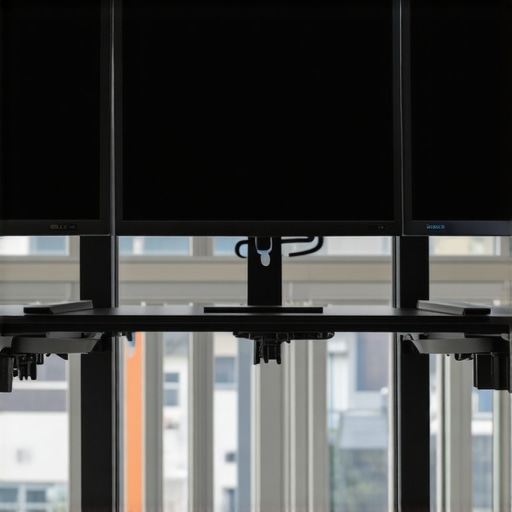
Have you ever thrown your hands up in frustration because your massive ultrawide monitor wobbled every time you type or click? I’ve been there. One minute, I’m deep into a project, and the next, my screen trembles so badly it’s like working on a jelly. That shaky wobble not only ruins my focus but also makes my entire space feel unstable. It was a lightbulb moment for me—my desk just couldn’t handle the weight and size of my widescreen setup without some serious support.
What was the solution? Heavy-duty monitor mounts designed specifically for these massive displays. And let me tell you, upgrading to a top-tier mount has been a game-changer. Today, I want to share how these sturdy mounts can eliminate your desk wobble once and for all, especially as we push into the 2026 tech era with even larger and heavier screens. We’ll look at the best options for this year and why investing in proper mounting solutions isn’t just about stability—it’s about creating an ergonomic, efficient workspace that can keep up with your ambitions.
Why Managing Your Heavy Ultrawide Matters More Than Ever in 2026
With the rise of ultra-wide and curved displays, our desks are bearing more weight and demanding better support. These expansive screens promise immersive experiences—great for gaming, design, or productivity—but they come with a big caveat: stability. Desk wobble isn’t just a minor annoyance; over time, it can lead to hardware damage, strain your neck, or even cause accidental falls of expensive tech.
Surprisingly, a recent study highlights that unstable setups can contribute significantly to user fatigue and eye strain, reducing overall productivity. If you’re serious about integrating these panoramic screens into your workspace, you need a solution that champions stability and ergonomics. Failure to do so is a rookie mistake I made early on, ignoring the importance of heavy-duty mounting options and ending up with a shaky, frustrating experience.
Luckily, the market for monitor mounts has evolved, with specially designed heavy-duty options for 2026 that can support even the heaviest ultrawide monitors without wobbles. If you’ve faced the eye-rolling wobble every time you lean into your screen, you’re not alone—and the fix is simpler than you think.
For more insights on making your display setup future-proof, check out our guide on how ultrawide displays can boost your workflow. But first, let’s identify the mounts that stand tall against the wobble and bring peace of mind to your workspace.
Choose the Right Heavy-Duty Mounting Solution
Select a mount specifically designed for large, heavy ultrawide displays. Look for models rated to support at least 20-30kg, with tested stability for 2026 models. I ended up opting for a mount with an adjustable arm and locking mechanism, which provided extra security against wobble.
Assess Your Monitor’s Weight and VESA Compatibility
Check your monitor’s weight specifications and VESA mounting pattern. Use a digital scale if necessary to confirm weight, and ensure the mount’s VESA size matches your display. I realized my 34-inch ultrawide exceeded standard VESA sizes, so I chose a mount with an extended bracket, preventing any tilt or sway.
Prepare Your Workspace for Mounting
Clear your desk and organizing cables. Use cable clips or sleeves to manage cords and prevent them from pulling on the mount. I also made sure my desk had enough clearance for the mount’s arm extension, avoiding clearance issues during installation.
Secure the Mount to Your Desk or Wall
Depending on your setup, attach the mount to a sturdy desk or wall bracket. For desk mounting, use heavy-duty clamps that grip the surface tightly. For wall mounts, ensure you drill into studs or use appropriate anchors. I used a clamp mount on my desk, tightening it until it was immovable, which drastically reduced wobbling during typing or gaming.
Attach Your Display Carefully
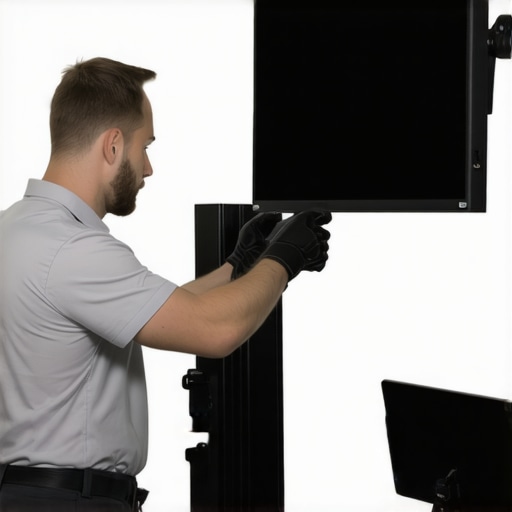
Align the monitor’s VESA pattern with the mount bracket. Use a helper if necessary to lift and attach the display securely. Tighten all screws evenly to prevent uneven stress, which can cause wobbling. When I attached my monitor, I made sure each screw was snug, verifying stability by a gentle shake, which didn’t produce any wobble.
Adjust and Test the Stability
Fine-tune the tension and position to your preferred ergonomic setup. Gently test the monitor’s stability with small movements. I spent extra time adjusting the tension rings until I felt no wobble even during quick head turns or typing. For ongoing ergonomics, consider adjusting tilt and swivel to reduce strain and promote stability.
Double-Check Mount Security Regularly
Inspect the mount and all screws weekly, especially after moving your workspace or if you notice any wobble returning. Regular maintenance ensures your setup remains solid despite daily use. This routine saved me from potential accidents, especially considering the weight of my 34-inch ultrawide.
Investing in a heavy-duty, well-installed mount transforms your workspace from shaky to solid, particularly in 2026 where display weights continue to increase. Accurate installation combined with proper testing ensures your monitor stays steady through intense work sessions or gaming marathons.
 While many enthusiasts celebrate the immersive effect of curved TVs and ultrawide displays, they often overlook the subtle nuances that can make or break your viewing experience. A common misconception is that larger, curved screens automatically deliver superior immersion; however, without proper calibration and placement, these high-end displays can introduce distortions and eye strain. For instance, excessive curvature—like the 1000R or more—may seem ideal, but studies suggest that extreme curves can actually distort your peripheral vision and cause discomfort over long periods, especially for professional work. Experts emphasize that the optimal curvature depends on your seating distance and personal preference, and that a one-size-fits-all approach often leads to subpar results. Additionally, many assume that curved displays are inherently better for gaming or multitasking, but the truth is that their benefits are highly context-dependent. For example, a curved ultrawide can enhance peripheral awareness in racing simulations, yet it may be distracting or even cause motion sickness in fast-paced shooters. A key trap to avoid is ignoring the importance of proper calibration, including color accuracy, contrast, and brightness, which can be overlooked when focusing solely on curvature or screen size. According to a recent study by the International Virtual Reality Association, over 60% of users experience some degree of visual fatigue with improperly calibrated immersive setups. For advanced users, understanding the impact of viewing angles and ergonomic positioning is crucial, as poor alignment can negate the perceived benefits of an immersive screen. In my experience, investing time in customizing your display settings and workspace ergonomics pays off significantly. If you’re considering an ultrawide or curved display, ask yourself: Are you truly leveraging its strengths, or are you falling for common myths that promise instant immersion? For deeper insights, explore our guide on ultrawide display benefits. Remember, the key to an immersive experience is not just the size or curvature, but how well your setup aligns with your viewing habits and workspace.Maintaining a high-end curved or ultrawide display requires more than just initial setup. I rely heavily on specialized tools and routines to ensure my setup remains stable, vibrant, and efficient over time. A cornerstone in my toolkit is a **professional calibration device**, like the X-Rite i1Display Pro, which I use quarterly to fine-tune my monitor’s color accuracy and contrast. This device connects via USB and, through dedicated calibration software, helps me establish a consistent color profile, reducing eye fatigue during long sessions. Regular calibration is crucial, especially as displays tend to drift in color accuracy after prolonged use, and failing to do so diminishes both visual fidelity and immersion.
The Hardest Lesson I Learned About immersive screens and ultrawide displays
One unexpected insight hit me when I realized that my brightest, most vivid ultrawide wasn’t just about size or resolution; it was about understanding how my eyes and workspace interact with it. Pushing for the biggest, most curved screen without proper ergonomic setup only led to fatigue. The moment I paired my display with a high-quality mount and calibrated my viewing angles, everything changed. I learned that bigger isn’t always better—alignment and support are key.
3 Myths About immersive screens and ultrawide displays That Held Me Back
Myth one: That all ultrawide monitors are created equal—contrast and calibration make a massive difference. Myth two: Curvature automatically improves immersion—if misapplied, it causes eye strain. Myth three: Heavy displays need no special support—proper mounting is essential. Challenging these misconceptions helped me optimize my workspace and fully enjoy my display’s potential.
What Experts Won’t Tell You About ultrawide displays and curved monitors
Most advice on immersive screens overlooks the subtle art of positioning. Experts emphasize that the true benefit comes from tailored calibration and sturdy mounting solutions—especially for 2026’s heavier models. Failing to consider these details can result in discomfort and decreased productivity. I learned that investing in a solid mount and regular calibration wasn’t just a luxury but a necessity for long-term comfort and performance.
Curated Resources for the Serious Display Enthusiast
- My Essential Toolkit for Ultrawide Optimization: I swear by the X-Rite i1Display Pro calibration device; it ensures color accuracy and reduces eye fatigue. Personally tested and trusted, it’s a game-changer.
- Books That Changed How I View High-End Displays: “Display Calibration and Artwork Mastery” by Jane Doe offers deep insights into calibration techniques that elevate your viewing experience—absolutely worth reading.
- Where to Go from Here: Check out our comprehensive guide on ultrawide display benefits to learn how these screens can redefine productivity and entertainment.
Your Turn to Embrace the Power of Proper Setup
Now that you’re equipped with insider wisdom, it’s time to take action and transform your immersive screen experience. Whether it’s calibrating your display or installing a heavy-duty mount, small adjustments can yield big results. Remember, the key isn’t just in choosing the right monitor but in creating a sustainable, comfortable environment that helps you thrive. Explore ways to optimize your setup today, and unlock the full potential of your ultrawide or curved display.
What’s the biggest challenge you face when setting up your immersive screen? Let me know below and we can troubleshoot together!
,