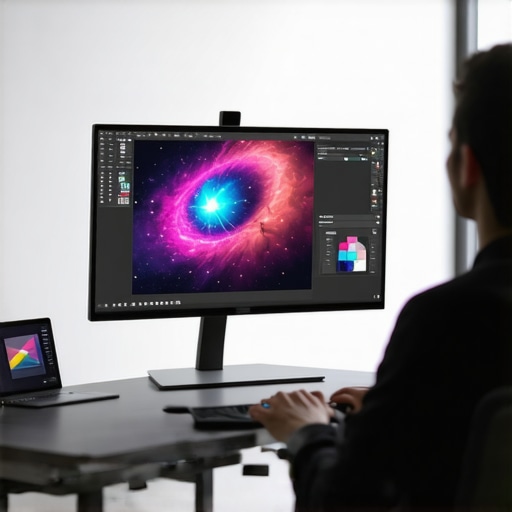
Have you ever stared at your flat-screen monitor, feeling like you’re just looking through a window rather than stepping into a world? I used to think my widescreen was enough—until I tried a curved monitor. The moment I sat down and looked at that gently arched display, everything changed. It was like the screen wrapped around me, pulling me into the action rather than keeping me at a distance. That lightbulb moment made me realize how much a curved monitor can boost immersion and comfort, especially for gaming, work, or binge-watching marathons.
Why a Curved Screen Might Be Your Best Upgrade Yet
In 2024, the tech scene is buzzing with the promise of more immersive screens, and curved monitors are leading the charge. The design isn’t just about aesthetics; it’s about redefining how we experience digital content. When I first switched from a traditional flat monitor to a curved one, I noticed a significant difference. The edges of the screen felt more natural to my eyes, reducing strain during long hours of work or play. Plus, the sense of depth and width increased, making everything from spreadsheets to 4K videos pop with vibrant realism.
Curved monitors also help minimize glare and reflections, a common annoyance on flat screens, especially in well-lit rooms. The gentle arc directs light away from your eyes, creating a more comfortable viewing environment. And with ultrawide options now more accessible and affordable, you can enjoy a panoramic view that enhances productivity and entertainment alike. Curious to see how this tech can transform your setup? Check out our comprehensive guide on transforming your workspace with an immersive curved monitor.
Is the Hype About Curved Displays Actually Justified?
Early on, I made a mistake—buying a curved monitor solely because it looked cool without considering my actual use case. Turns out, not every curve suits every task. Some models can cause distortion in certain applications, or simply be an unnecessary expense. That’s why I recommend doing your homework before jumping in. Trust me, the benefits are real, but they vary depending on your needs. For instance, if you’re into gaming or video editing, the immersive effect is undeniable. But if you mostly work with text or spreadsheets, the difference might be subtler. To avoid my rookie mistake, I dove into detailed reviews and compared various models—something I wish I had done earlier.
So, are you wondering if a curved monitor is worth the investment? If you’ve faced eye strain or felt disconnected from your screen, you’re not alone. Many users have turned to curved displays to create a more engaging, comfortable experience. Want to explore the options best suited for your needs? Our detailed buying guide covers everything from ultrawide curved displays to the latest innovations in 2024. Dive deeper into the world of immersive screens and discover how they can elevate your digital life.
Ready to see the difference for yourself? Let’s explore the practical steps to choosing and setting up your perfect curved monitor, starting with understanding what makes them so special. For more insights, check out our full list of top monitors at discover the best curved monitors for 2024.
Pick the Right Model for Your Needs
Start by identifying what you primarily use your monitor for—gaming, productivity, or entertainment. I once bought a high-refresh-rate curved gaming monitor without considering my workspace space, leading to a cramped setup. Instead, I later reviewed models on ultrawide displays for total immersion to find a size that fits comfortably. Measure your desk space and check the curvature radius; a more pronounced curve (like 1800R) enhances immersion but needs more room. Choose a model with features matching your needs—refresh rate for gaming, color accuracy for editing, or size for multitasking.
Evaluate Connectivity and Compatibility
Make sure your PC or gaming console can connect to your chosen monitor. Modern curved monitors often support HDMI, DisplayPort, and USB-C. I faced a hiccup when my laptop lacked the right port, so I bought an adapter. Check your device specs and the monitor’s input options, which you can find in the product specifications. Also, verify your graphics card can handle the resolution and refresh rate—nothing worse than setting up and realizing your GPU can’t push the display properly.
Prepare Your Workspace for Optimal Setup
Clear your desk to create a clean environment. Position your monitor at eye level—use adjustable stands or monitor arms if needed. I initially placed my monitor too low, causing neck strain; adjusting it to eye level greatly improved comfort. Use a level to ensure the monitor isn’t tilted sideways. Consider ambient lighting and glare; a matte finish on the monitor reduces reflections, and positioning your desk away from direct windows helps. For a truly immersive experience, combine your curved monitor with a good quality sound system—trust me, it makes a difference.
Configure Your Display Settings
Once physically set up, power on your monitor and access display settings. Adjust resolution to the monitor’s native pixel count—usually 1920×1080 or higher for 4K screens. Tweak refresh rate in your system settings for smoother visuals. For gaming, enabling G-Sync or FreeSync reduces tearing. I once spent hours adjusting color profiles for better contrast; this step is essential, especially for content creators. Explore settings like brightness, contrast, and sharpness to match your environment and preferences. Don’t forget to set your desktop background to a high-quality, immersive image—something that complements the curved display’s depth.
Optimize Your Software and Workspace
Arrange your desktop layout to take full advantage of the ultrawide or curved display. Use window management tools or built-in OS features to split screens efficiently. I installed software like DisplayFusion to manage multiple windows seamlessly, which boosted my productivity. For gamers or multimedia editors, calibrate your color settings for accuracy. Keep your drivers up-to-date, especially graphics drivers, to ensure compatibility and performance. Regularly clean your monitor surface with a microfiber cloth to maintain clarity and prevent dust buildup. With your setup optimized, you’re ready to enjoy an immersive viewing experience that feels natural and comfortable—no more squinting or neck strain.
Test and Fine-Tune Your Setup
Finally, spend some time testing different content—games, videos, work tasks—and tweak settings accordingly. I once used a calibration tool to perfect my color profile, which made a noticeable difference in visual quality. Adjust the monitor’s height and angle for comfort during long sessions. Remember, a well-tuned setup not only looks good but also reduces fatigue. If you encounter issues like flickering or color inconsistencies, consult your monitor’s manual or support pages, such as contact support. Your immersive experience depends on these details—so take your time, experiment, and enjoy your new curved monitor to the fullest.
Many enthusiasts jump into the world of curved TVs and ultrawide monitors with high expectations, but there are some misconceptions that can lead to disappointment or even poor investment choices. One of the most widespread myths is that a curved display is universally better than flat screens. In reality, the benefits heavily depend on your usage. For instance, while gamers and creative professionals often gain immersive advantages, office work involving spreadsheets or coding might not see the same gains, and some users find the curvature distracting or disorienting. It’s crucial to assess your specific needs before opting for a curved screen.
Another common mistake is believing that larger or more curved always means better. The curvature radius, such as 1800R or 1500R, influences how the display envelops your field of view. A mismatch between your workspace size and the curvature can result in awkward viewing angles and increased eye strain. I once purchased a highly curved ultrawide without considering my desk space, leading to an uncomfortable viewing experience. To avoid this, measure your workspace and choose a curvature that complements it. For more insights on selecting the right size and curvature, check out our guide on ultrawide displays for total immersion.
Why do many believe that curved displays eliminate glare completely? It’s a misconception.
While curved screens can reduce reflections from ambient light sources, they don’t eliminate glare entirely. The myth that a curved monitor is immune to reflections can lead users to overlook proper room lighting or screen placement. In bright environments, glare can still be a problem, especially with glossy finishes. The key is positioning your monitor away from direct light sources and considering matte finishes to minimize reflections. This nuance is often overlooked, leading to frustration. For an optimal setup, consider room lighting and monitor finish, not just curvature.
Another advanced point is that the perceived immersion from ultrawide or curved displays can sometimes be overstated, especially if the software or games aren’t optimized for such screens. Many titles lack proper support for ultrawide aspect ratios, leading to visual distortions or black bars. This is a subtle trap—assuming that simply owning a curved ultrawide will automatically enhance your experience. To truly benefit, ensure your content and applications support these formats. Consulting detailed reviews and compatibility guides can save you from this pitfall. For specific recommendations, explore our article on ultrawide-curved display benefits.
In summary, the key to making the most of curved TVs and ultrawide monitors is understanding the nuances—curvature radius, workspace size, lighting conditions, and software support. Don’t fall for the hype that bigger and more curved always equals better. Instead, evaluate your environment and needs carefully. Have you ever fallen into this trap? Let me know in the comments and share your experiences with these advanced display setups.
Once you’ve invested in a high-quality curved monitor or ultrawide display, maintaining it becomes essential to preserve its immersive experience. Over time, dust, fingerprints, and even minor technical issues can diminish your display’s performance and clarity. My go-to method for keeping my setup in top shape involves a combination of specific tools and consistent routines.
How do I maintain my curved screen over time?
First, I rely on a microfiber cleaning cloth designed for electronic screens. Unlike regular cloths, these prevent scratches and static buildup. I pair this with a gentle screen cleaner, ideally alcohol-free and ammonia-free, to wipe down the surface weekly. This routine keeps dust, smudges, and fingerprints at bay, ensuring optimal clarity and color accuracy.
For hardware health, I use a high-quality monitor arm with adjustable tension. This not only allows me to position the screen ergonomically but also minimizes wear on the monitor’s stand. Regularly checking and tightening the mounting screws prevents accidental slips or damage. Additionally, I ensure the cables—HDMI, DisplayPort, or USB-C—are neatly managed and free of kinks or frays, which can cause signal issues over time.
To safeguard the internal components, I run routine software diagnostics. Tools like DisplayCAL help calibrate colors precisely and detect anomalies early. Firmware updates from manufacturers can fix bugs or improve compatibility, so I set a reminder to check for updates every few months. Keeping graphics drivers current is equally crucial, especially when using features like G-Sync or FreeSync, which enhance immersive experiences.
Moreover, I keep an eye on environmental factors. Using a dust filter on vents and avoiding direct sunlight reduces temperature fluctuations and dust ingress. If I notice flickering or dimming, I troubleshoot immediately—often, a simple power cycle or replacing a faulty cable resolves the issue. It’s amazing how small habits can extend the lifespan of your monitor and preserve that stunning visual immersion.
What tools do I recommend for long-term display health?
For physical cleaning, I recommend a microfiber cloth paired with a mild, screen-safe cleaner. For calibration, color calibration tools like DisplayCAL ensure your colors stay vibrant and true over time. Cable management solutions such as velcro straps or cable sleeves help prevent wear and tear on connections, reducing signal dropouts or flickering. Lastly, a good surge protector or UPS can prevent power surges from damaging your display, especially during storms.
Looking ahead, I predict that as technology advances, software-based diagnostics and AI-driven calibration will become standard, making maintenance easier and more precise. Manufacturers are also likely to improve firmware and hardware durability, extending the lifespan of high-end displays. But for now, sticking to routine cleaning, software updates, and hardware checks remains the best way to keep your investment working flawlessly. If you want to optimize your setup further, I highly recommend exploring advanced tips for immersive screens and maintaining peak performance.
Don’t forget—regular maintenance isn’t just about preserving image quality; it ensures your immersive setup continues to inspire and perform for years to come. Try integrating these habits today and enjoy a consistently stunning viewing experience.
The Hardest Lesson I Learned About Curved Displays
- One of my biggest surprises was realizing that not all curved monitors provide a seamless experience. Some cheaper models distort images or cause eye strain, which can diminish immersion rather than enhance it. I learned to prioritize build quality and reviews over flashy specs.
- Another insight is that the ideal curvature depends heavily on your workspace size. A too-sharp curve in a small desk setup can feel overwhelming, while a gentle arc on a large desk creates natural viewing angles. Measuring your space before buying is crucial.
- Finally, I discovered that content support matters. Many games and applications are optimized for flat screens, so owning a curved monitor won’t automatically guarantee a perfect experience. Checking compatibility and aspect ratios saved me from frustration.
My Essential Toolkit for Immersive Screens
- Display calibration tools like DisplayCAL help me tweak colors and contrast for stunning visuals. Trusting my eyes and calibrating regularly keeps the display vibrant.
- High-quality microfiber cloths and screen-safe cleaners are my go-to for maintaining clarity and preventing dust buildup, ensuring longevity and sharpness.
- Cable management solutions like velcro straps and cable sleeves keep my setup tidy, preventing wear on connections and signal issues over time.
- Firmware updates and driver management ensure my monitor stays compatible with the latest tech, avoiding performance hiccups that can disrupt immersion.
Your Turn to Elevate Your Viewing Experience
Embracing the potential of a curved monitor can truly transform your digital world, making work, gaming, and entertainment more engaging and comfortable. The key is to choose carefully, calibrate often, and maintain your setup diligently. Don’t let misconceptions or shortcuts hold you back from enjoying the immersive experience you deserve. Ready to take the leap and redefine your visual boundaries? Share your thoughts or questions below, and let’s start that journey together!
I completely agree with the post’s emphasis on properly measuring your workspace before choosing a curved monitor. I made the mistake of rushing into a 1800R ultrawide without considering my limited desk space, which made the setup feel cramped and uncomfortable. Since then, I’ve learned that understanding your environment is crucial for maximizing the benefits of curvature and immersion. I also found that using a monitor arm helps me adjust the height and angle for long gaming sessions, reducing neck fatigue. Regarding software calibration, adjusting the color profiles and refresh rate made a noticeable difference in visual clarity. Has anyone experimented with different curvature radii, like 1500R versus 1800R? I’d love to hear how others’ experiences compare and what works best for different setups.
I really resonate with the post’s take on the importance of workspace measurement and ergonomics when choosing a curved monitor. I’ve recently upgraded to a 1500R curvature and found that it fits my desk perfectly, providing an immersive experience without feeling overwhelming. I used a monitor arm to fine-tune the height and angle, which made a huge difference in reducing neck and eye strain after long sessions. One thing I’ve noticed is that achieving the right curvature depends a lot on your desk size and viewing distance. Has anyone else experimented with different curves like 1500R versus 1800R? I’d be interested to hear how these options impact immersion and comfort over extended use. Also, I’ve found setting the right color profile after calibration really enhances my visual experience, especially when working on creative projects. It’s amazing how these small adjustments can make a noticeable difference. What are your thoughts on balancing curvature and workspace ergonomics for optimal comfort?
Reading through this post really resonated with my own experience transitioning to a curved monitor. I had previously dismissed the idea, thinking flat screens were just fine for the tasks I do daily. However, once I upgraded to a 1800R curved monitor, I immediately noticed how much more engaging and comfortable it was, especially during long work hours and gaming sessions. The reduction in glare and the natural eye movement made a big difference in reducing fatigue. That said, I learned quickly that matching the curvature to my workspace size was vital. I initially chose a broader curve without considering my desk’s dimensions, which led to some awkward viewing angles. Now I measure my space thoroughly before selecting a model, and I find that a 1500R offers a nice balance for my setup. Curious—has anyone experimented with even more moderate curves like 1200R or 1000R? Do these provide enough immersion without feeling exaggerated? I’d love to hear practical tips from others who have optimized their setup for comfort and immersion.