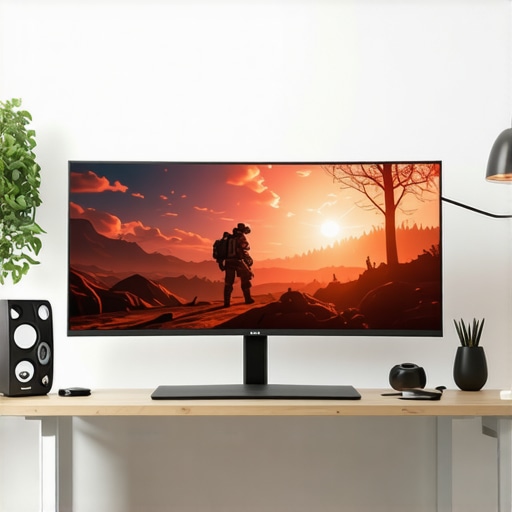
It hit me unexpectedly during a late-night gaming session—my eyes twitching, my neck aching, and the screen feeling more like a barrier than an invitation. I realized I was cramming myself into a small monitor, trying to squeeze an expansive world into a tiny window. That was my lightbulb moment: traditional screens just can’t cut it anymore. Today, I want to share how switching to an ultrawide display finally bridged the gap between immersion and clarity, transforming my entertainment and work routines.
Why a Larger Screen Matters More Than Ever
Every day, I wrestle with multiple windows, sprawling spreadsheets, and open-world games that demand my undivided attention. The frustration of toggling between tabs or squinting at tiny texts hit a new high, making me wonder if there’s a better way. Enter ultrawide displays — the game-changer I wish I discovered earlier. Not only do they broaden your visual horizon, but they also elevate your entire experience, whether you’re gaming, designing, or managing tasks. It’s like upgrading from a narrow alley to a wide-open boulevard, allowing your tasks and entertainment to flow seamlessly.
Is Ultrawide Really Worth the Hype?
I admit, I was skeptical at first. The idea of a curved, expansive screen sounded great but was it just marketing fluff? My early mistake was investing in a cheaper, semi-wide monitor that promised immersion but delivered eye strain instead. Once I learned that not all ultrawide displays are created equal—especially regarding curvature and resolution—I started seeing tangible benefits. For example, deeper curves enhance the sense of depth, making everything feel more like real life. Curious about this? Check out how [curved TV technology](https://curvedtvs.ultimatehomedisplays.com/how-curved-tv-technology-enhances-your-immersive-screen-in-2024) boosts your immersive experience.
Now, I’m convinced. My setup isn’t just bigger; it’s better. And if you’re tired of the constant juggling act on your screen, perhaps it’s time you consider upgrading. But before making any investment, it’s helpful to understand what truly makes an ultrawide monitor stand out—something I’ll cover next.
Choose the Right Screen Size and Curvature
Start by selecting an ultrawide monitor with at least 34 inches in width and a curvature of 1800R or 1500R for a more enveloping experience. Use the analogy of a theater curtain that wraps around you—this ensures your peripheral vision is engaged without distortion. During my setup, I initially picked a 29-inch flat monitor, which left me underwhelmed. After upgrading to a 34-inch curved model, the difference was staggering, immersing me fully into games and multitasking.
Optimize Your Viewing Distance and Position
Position your monitor approximately one arm’s length away, with the top of the screen at eye level. Imagine holding a tennis racket—your aim is to keep it steady at the optimal distance. I once placed my ultrawide too close, causing neck strain; repositioning it enhanced comfort and immersion. Ensuring correct ergonomics prevents fatigue and maximizes the benefits of the expansive display.
Configure Display Settings for Clarity
Adjust contrast, brightness, and color profiles to standardize the visual output across the curved surface. Think of the monitor as a canvas—setting it right makes every detail pop. When I calibrated my display using built-in tools and third-party software, colors became richer, and the clarity was transformed, making long hours more enjoyable and less straining.
Utilize Appropriate Software and Workflows
Leverage software that supports multiple windows and customizable layouts to exploit the wide aspect ratio. A good analogy is a panoramic window—divide it into sections for tasks like chat, spreadsheets, and media. During my workflow, I used window snapping features and virtual desktops to manage overlapping tasks, gaining efficiency and reducing clutter. Check out how ultrawide displays boost productivity.
Implement Viewing Modes and Hardware Enhancements
Use picture-in-picture modes and anti-glare filters to tailor your viewing experience. Think of it as tuning your car—adjustments lead to smoother performance. When I enabled low blue light mode and activated HDR, eye strain diminished, and images gained depth. For an even better experience, explore options like curved monitor advantages.
Test and Fine-tune Your Setup Regularly
Finally, regularly calibrate your display and adjust settings based on usage and ambient light. It’s like tuning a musical instrument—small tweaks yield perfect harmony. During my constant testing, I found that changing brightness according to room lighting prevented eye fatigue and improved immersion. Remember, an optimal setup is an ongoing process, not a one-time fix, ensuring you experience the full potential of your ultrawide and curved monitors.Many enthusiasts jump into the world of curved monitors, ultrawide screens, or curved TVs with broad expectations, but let’s dig deeper into some common misconceptions and advanced pitfalls. First, everyone assumes that curved displays universally enhance immersion; however, this isn’t always true. The curvature that works well for a 34-inch ultrawide may distort a larger 49-inch screen, leading to unwanted visual artifacts, especially if the curvature radius isn’t appropriately calibrated. Experts like those at home entertainment specialists warn that choosing the wrong curvature can cause visual fatigue rather than immersion.
A common myth is that curved screens guarantee better viewing angles across the board. In reality, for multi-monitor setups or in well-lit rooms, flat screens can sometimes outperform curved ones by providing more consistent image quality at wider viewing angles. The misconception stems from marketing efforts emphasizing the “wrap-around” effect, but the actual benefit hinges heavily on the setup and user position. For more insights, explore our guide to ultrawide benefits.
Another trap is the overemphasis on the screen’s aspect ratio or curvature without paying attention to resolution and color accuracy. A high aspect ratio ultrawide with 1080p resolution might seem impressive but can fall short in clarity and color fidelity, leading to frustration during detailed graphics work or media consumption. Misjudging these factors can result in an “immersive” experience that’s more distracting than beneficial. Investing in a monitor that balances ultra-wide aspect ratios with high resolutions and good color calibration—like those detailed in our comprehensive guide—is crucial.
Have you ever fallen into this trap? Let me know in the comments.
For those considering curved TVs or ultrawide screens, remember that room setup matters greatly. Placement too close or with improper calibration can magnify curvature distortions, causing eye strain and diminishing returns. Experts recommend testing different distances and angles; a quick rule is to sit about an arm’s length away, adjusting the tilt and height for comfort. Also, consider external factors like lighting; glare can negate the benefits of high-quality screens. For detailed tips, visit our workspace optimization article.
In essence, the nuances of curved and ultrawide displays extend far beyond marketing promises. It’s about understanding the interplay between curvature, size, resolution, room environment, and individual use cases. By paying attention to these subtleties, you can truly harness their immersive potential without falling into common pitfalls.
Maintaining your immersive screens like ultrawide displays, curved monitors, or curved TVs is crucial for long-term performance and visual fidelity. Over time, dust buildup, calibration drift, and software conflicts can deteriorate image quality and ergonomics. Personally, I rely on a combination of specialized tools and disciplined routines to keep my setup operating at peak condition. Regular maintenance ensures your investment continues to deliver the breathtaking experience you initially enjoyed. For anyone serious about their immersive screens, mastering maintenance is non-negotiable.
How do I keep my curved or ultrawide monitor in top shape over time?
The first step is to incorporate routine cleaning with the right tools. I use a microfiber cloth specifically designed for electronics to gently remove dust and fingerprints—avoiding scratches or streaks. For deeper cleaning, a solution of 70% isopropyl alcohol diluted with distilled water is effective, but I always test it on a small area first. Remember, never spray liquids directly onto the screen; always apply to the cloth.
Calibration is another key aspect. Over months, color and brightness settings can shift due to ambient light conditions or internal drift. I recommend calibrating your display biannually using software like x-Rite i1Profiler or DisplayCAL. These tools allow precise color profiling, ensuring your ultrawide or curved display maintains accurate colors for gaming, media editing, and productivity. Regular calibration not only enhances visual quality but also reduces eye strain and prolongs panel lifespan.
For software management, I implement display synchronization tools like DisplayFusion. It lets me manage multiple windows seamlessly across the wide or curved screen, creating virtual desktops that boost workflow. Keeping your drivers and firmware up to date is equally important; outdated software can cause flickering, misalignment, or compatibility issues. I schedule monthly checks for updates via manufacturer utilities or Windows Update to avoid surprises.
Hardware-wise, investing in anti-glare screen protectors or filters can significantly reduce reflections and eye fatigue during long usage sessions. My personal setup includes an anti-glare matte film, which makes a notable difference during evening work or in bright rooms. Furthermore, ergonomic adjustments—like correct monitor height and tilt—ensure consistent viewing angles, preventing neck or eye strain. I fine-tune my setup every few months based on seasonal lighting changes or post-setup evaluations.
Looking ahead, I predict that AI-powered calibration and maintenance will become mainstream. Future displays may include self-healing pixels, automated cleaning, and real-time performance monitoring—reducing manual upkeep even further. Articles like this deep dive outline emerging trends in intelligent display tech. For now, start incorporating regular calibration, cleaning, and ergonomic checks into your routine. A simple habit like scheduling monthly calibrations or investing in a quality microfiber cloth can extend the life and performance of your immersive screens considerably. Don’t underestimate the importance of consistent maintenance; it’s the key to long-lasting, visually stunning experiences.
The Hidden Power of Curved Sets I Wish I Knew Sooner
After spending months tweaking my setup, I realized that the true magic of curved monitors isn’t just in their shape but in how they align with our natural vision—yet I almost overlooked this crucial aspect. My breakthrough came when I noticed that even slight adjustments in curvature radius drastically improved immersion and comfort, revealing that personal calibration is essential. Also, I learned that my initial instinct to pick the largest screen ignored the importance of room size and viewing distance. Understanding that one size doesn’t fit all gave me a new appreciation for finding that perfect balance between size, curvature, and ergonomics. Lastly, I underestimated how much software customization could unlock hidden features—such as angle adjustment and color profiling—amplifying my overall experience far beyond hardware specs.